How to Light a Film and TV Stills Shoot: A Practical Guide
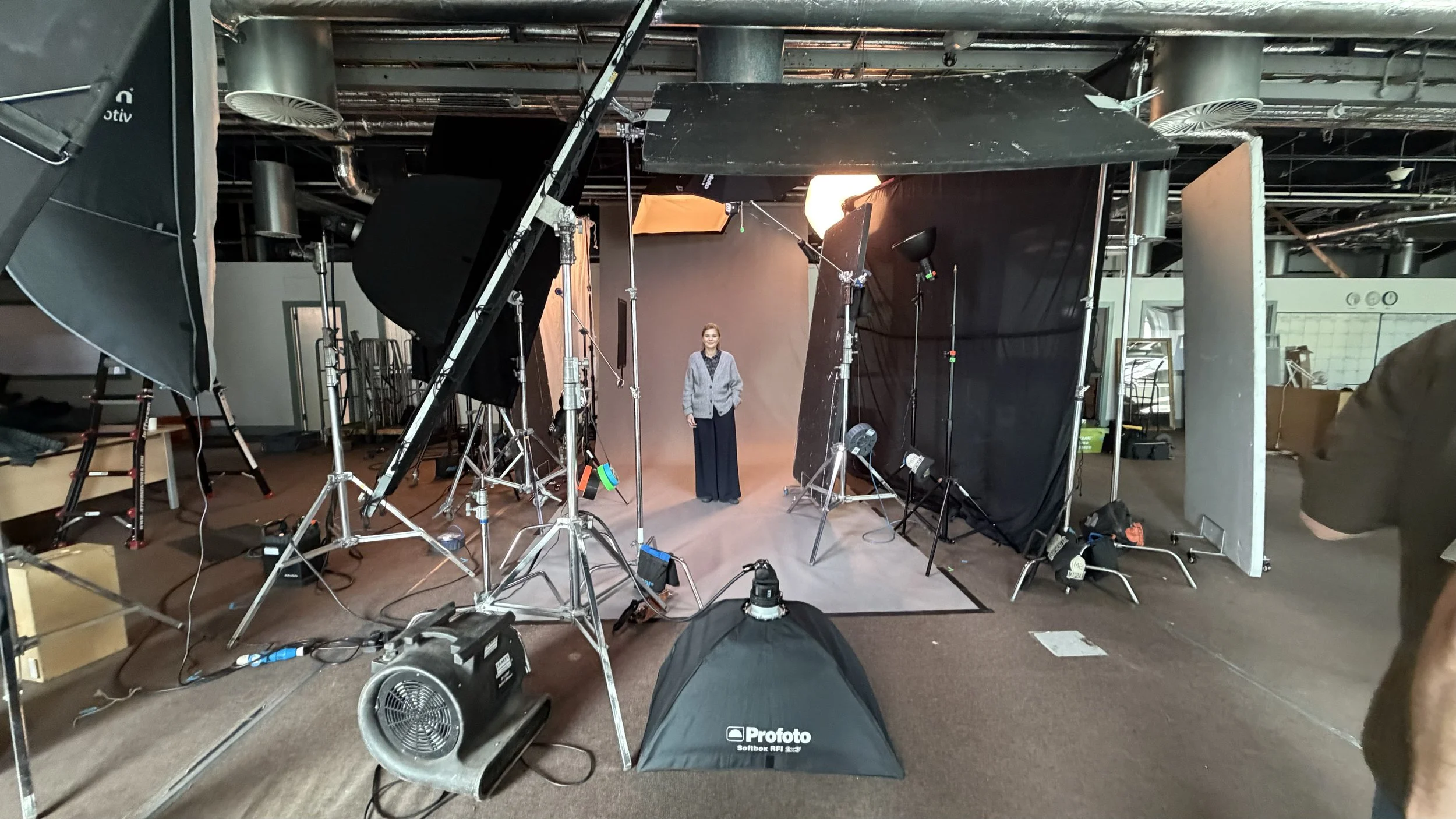
Every film and television production leans on stills, yet the lighting behind those images rarely gets the attention the moving camera does. Unit stills, gallery portraits, key art and the photographs the art department needs all carry the look of a production out into the world, so getting the light right matters as much here as it does on the main unit. This guide covers how lighting works on a stills shoot within a film or TV production, what to hire for each situation, and how to keep a stills setup running smoothly alongside a busy crew. It is written broadly for photographers, gaffers and production teams working across Northern Ireland and the Republic of Ireland.
The four kinds of stills on a production
Most on set photography falls into four groups, and each asks something different of your lighting.
Unit stills are captured during or around filming, often using or matching the existing set lighting. Here the priority is speed and a light touch, working with what the director of photography has already built rather than fighting it.
Gallery and portrait sessions are shot separately from filming, usually with cast in costume against a clean or styled background. These are controlled setups where you own the light entirely, so power, shaping and consistency become the focus.
Key art and special shoots produce the images that end up on posters, streaming tiles and campaign material. They demand the highest level of control and repeatability, since the results will be scrutinised at large sizes and reused for months.
Art department photographs are the images created to live inside the world of the film itself: framed portraits used as set dressing, period or aged photographs, pictures of characters for props, and images for newspapers, graphics and signage. These are styled to match a period or a character and are often shot in large numbers across a production. Because they sit together on a wall or across a scene, every frame has to match the ones around it, so consistency is everything and any colour drift shows immediately.
Knowing which of these you are lighting is the first step, because it determines how much power, portability and precision you actually need.
Matching power to the job
The core decision on any stills shoot is mains versus battery, and it usually comes down to where you are working and how long you are working for.
For controlled studio and stage environments with power on hand, mains pack and head systems remain the standard. The Profoto D4 2400 is the pack to reach for on long art department and gallery days. When you are shooting dozens of portraits or period images that all have to match, the D4 holds its colour and output steady from the first frame to the last, so a wall of framed photographs reads as one consistent set rather than a patchwork. Precise control in small increments and stable colour across a full day are exactly what this work needs. The Pro8 2400 recycles faster and offers shorter flash durations, which makes it the choice for movement, product detail and technical work where you are freezing action or chasing fine detail. Paired with ProHeads, BiTube heads or Acute and D4 heads, all of these deliver the repeatable results that gallery, key art and art department work rely on.
For location and exterior work away from mains power, a Profoto B4 1000 gives full battery operation without giving up speed or flash duration control. When you need to overpower daylight or feed a large modifier outdoors, a BiTube head can be run from two B4 packs to combine their output into a single even source.
For fast, mobile unit stills, battery monolights such as the Profoto B10X and B10X Plus are hard to beat. They are small enough to move quickly around a set, carry their own power, and include modelling lights and integrated AirTTL, so a photographer can keep pace with a moving production.
Flash or continuous
Flash still dominates stills work for its power and its ability to freeze motion, but continuous LED lighting has become genuinely useful on productions that shoot stills and motion together. LED systems from Arri, Cream Source, Nanlite and Aputure give flicker free, colour accurate output, which lets a stills setup share a visual language with the footage being captured on the same day. On a hybrid shoot, matching your stills light to the look of the moving camera keeps everything feeling like one production rather than two.
Modifiers: where the look is made
The source sets the power, but modifiers set the look. On a production the right modifier choice is what makes stills sit alongside the film convincingly, so it is worth understanding what each one actually does.
Soft key lights: broad sources
The larger a source is relative to the subject, the softer the light. Shadows fall off gradually, contrast drops, and skin renders smoothly. A large softbox or a 6ft OctaLite gives a broad, wrapping key with a clean round catchlight, which is flattering for portraits and cast gallery work.
Butterfly frames take this further. Fire a source through an 8x8 or 12x12 silk and you turn a single light into a huge soft overhead or side source, soft enough for beauty and big enough to cover a group or a full length figure evenly. The larger the frame, the softer and more wrapping the result, and the more people you can light at once with one source.
Using the silk or leaving it out is a real creative choice, not just a technical one. Through the silk you get soft, low contrast, even light. Take the silk away and the same source becomes harder and more direct, with more defined shadows and brighter specular highlights on skin. It is the same light in the same place, but a very different feel.
Hard sources: punch and throw
Hard reflectors do the opposite of a softbox. A Magnum reflector gives a narrow, punchy beam with high output and long throw, crisp edged shadows and bright specular highlights. Narrow beam and Tele Zoom reflectors focus that further for reach or for a defined pool of light. These are the tools for drama, contrast and punch, or for a hard key when the look calls for a harder edge.
Edge, back and hair light
This is where the difference between soft and hard shaping becomes most obvious, and it is worth seeing the two side by side.
A strip box such as a 1x4 or 1x6, especially with a grid, is built for edge work. A gridded 1x4 used as a back or hair light lays a soft, controlled strip of light along a shoulder or through hair, while the grid keeps spill off the background and out of the lens. The result is a gentle, forgiving rim that separates the subject from the background without drawing attention to itself.
Put a Magnum reflector with a grid in that same back light position and you get something quite different. Now the rim is a hard, bright, specular kick with a defined edge and far more pop. It separates aggressively and picks up texture in hair, but it is far less forgiving, and any stray flare or hotspot is immediately visible.
So the same job, separating a subject from its background, produces two very different images: the gridded strip box is soft and quiet, the gridded Magnum is hard and loud. Choosing between them is really choosing the mood of the shot, which is why on a production you often carry both.
Control tools
Grids, or egg crates, flags and scrims are what keep all of this precise. Grids narrow a beam and stop spill, flags block light off a background or a lens, and scrims knock intensity down without changing the quality. Matching every modifier to the same lighting system keeps output predictable when a shoot is moving quickly and there is no time to guess.
Fitting the stills setup around the unit
Lighting stills on a live production is as much about workflow as it is about kit. The stills setup has to fit around the schedule, the set and the look the director of photography has established, often with very little turnaround between takes or setups. Reliable, familiar gear matters here, because a failed pack or a slow recycle in the middle of a gallery slot costs time the production does not have. A tethered workflow with a digital imaging tech keeps images reviewed and backed up as they are shot, so nothing is lost and the client sees results on the day.
Delivery and support across Ireland
Local access to equipment reduces downtime and risk on a production. Belfast Studio Rental delivers across Northern Ireland and the Republic of Ireland, and gear can be delivered, set up and roughed in before you arrive, so a crew is not waiting on couriers or building kit from scratch. If a component fails or a configuration needs changing, support is close at hand rather than a day away, which is what keeps a shoot moving.
A short planning checklist
A little preparation keeps a stills shoot running cleanly. Book early, especially in busy commercial and production seasons. Confirm you have the power your packs need on location or stage. Test high output setups before the shoot day rather than on it. Allow time for delivery or collection if you are working outside Belfast. And check that packs, heads and modifiers are all matched for full compatibility.
Getting a quote
Lighting a film or TV stills shoot comes down to matching the right power and shaping to the job, whether that is a long art department day that has to hold its colour, a controlled gallery session, or fast unit stills on a moving set. From battery B4 and B10X kits for location work to precise D4 and Pro8 packs for sustained studio days, and a full range of soft and hard modifiers to shape the result, the aim is flexibility and consistency.
For current availability, specifications and a tailored quote, contact Belfast Studio Rental. We supply lighting, grip and crew for film, television and advertising productions across Northern Ireland and the Republic of Ireland.